
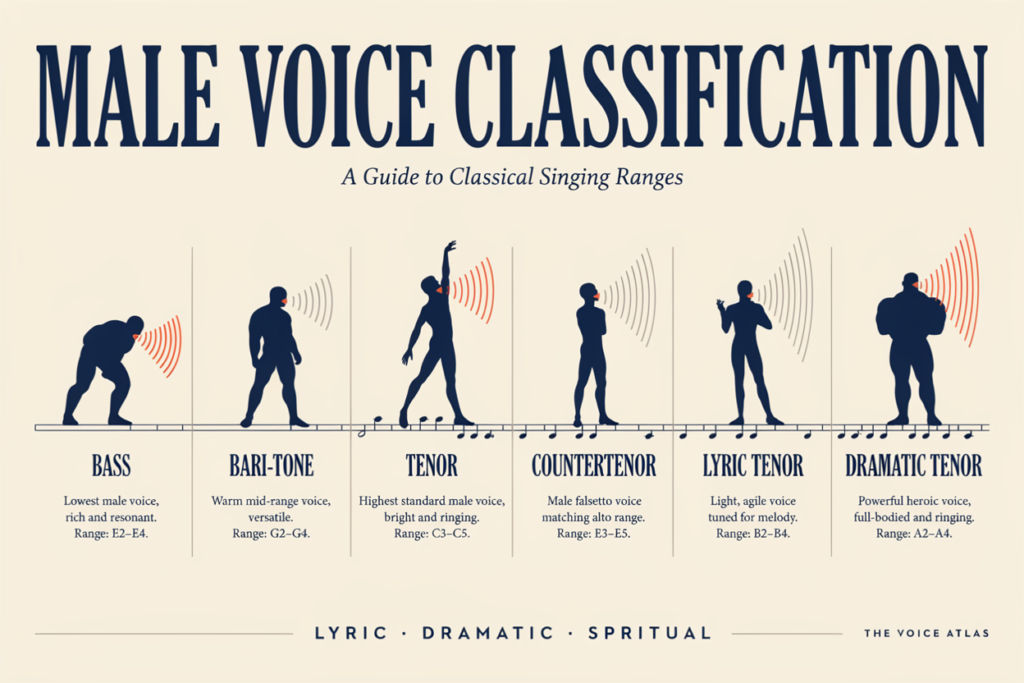
Male voice classification is a system used to categorize male singers
based on vocal range, tessitura, vocal color, vocal weight, and overall
singing characteristics. The three main classical male voice types are
tenor, baritone, and bass.
Although vocal range is an important factor, voice classification is not
decided only by the highest and lowest notes a singer can produce. A
singer’s comfortable singing area, tone quality, and natural vocal
characteristics are equally important.
Understanding male voice types helps singers choose suitable songs,
develop healthier technique, and understand where their voice naturally
fits.
How Are Male Voices Classified?
Vocal Range
Vocal range describes the distance between a singer’s lowest and highest
notes. It provides useful information, but it does not completely define
a voice type.
Two singers may have similar ranges but different classifications
because their voices may have different tones, strengths, and
comfortable areas.
Tessitura
Tessitura is the part of a singer’s range where the voice feels most
comfortable and sounds strongest.
For example, a singer may be able to reach high notes like a tenor but
still feel more natural in the middle range of a baritone.
Vocal Color and Tone
Vocal color, also called timbre, describes the unique sound quality of a
voice.
- Tenors often have brighter and clearer tones.
- Baritones usually have warm and rich vocal colors.
- Basses are known for dark and deep resonance.
Vocal Weight
Vocal weight refers to how light or heavy a voice sounds. Some voices
are agile and bright, while others have greater power and dramatic
depth.
What Are the Main Male Voice Types?
Tenor Voice
The tenor is the highest standard male classical voice type. Tenors are
known for bright upper registers, emotional intensity, and strong
melodic presence.
A typical tenor range is often around C3 to B4, although trained singers
may extend beyond this range.
Common tenor characteristics include:
- Bright vocal tone
- Strong upper register
- Clear projection
- Expressive qualities
Tenor subcategories include:
Lyric Tenor
A lyric tenor has a smooth, warm, and expressive voice. These singers
often perform romantic and melodic roles.
Dramatic Tenor
A dramatic tenor has more vocal power and intensity, making the voice
suitable for heavier opera roles.
You can explore more about this classification in the guide to tenor
voice.
Baritone Voice
The baritone is the middle male voice type and is considered one of the
most common male classical classifications.
Baritones usually have:
- Rich middle-range tone
- Strong chest voice
- Balanced high and low notes
- Warm vocal color
A typical baritone range is often around A2 to A4.
Baritone subcategories include:
Lyric Baritone
A lyric baritone has a lighter, smoother sound with flexibility for
expressive roles.
Dramatic Baritone
A dramatic baritone has greater vocal weight and power for intense
characters.
Learn more about this voice category through the baritone voice
guide.
Bass Voice
The bass is the lowest standard male classical voice type. Bass singers
are recognized for deep resonance, strong lower notes, and powerful
vocal presence.
A typical bass range is approximately E2 to E4.
Bass characteristics include:
- Deep vocal resonance
- Dark tone quality
- Strong lower register
- Powerful projection
Bass subcategories include:
Lyric Bass
A lyric bass has a smoother and more flexible sound.
Dramatic Bass
A dramatic bass has a heavier, stronger tone suited for powerful roles.
Basso Profundo
Basso profundo is the deepest bass category, known for exceptionally low
and resonant notes.
You can learn more about this category through the bass voice
guide.
Male Voice Classification Chart
Voice Type Position Typical Range Main
Characteristics
Tenor Highest male Around C3–B4 Bright tone,
voice powerful upper
range
Baritone Middle male voice Around A2–A4 Warm, rich,
balanced sound
What Is the Difference Between Range and Voice Type?
Vocal range and voice type are related but different concepts.
Range describes the notes a singer can produce. Voice type describes the
natural characteristics of the voice, including where it feels strongest
and how it sounds.
A singer should not classify themselves only by reaching a certain note.
A trained evaluation considers range, tessitura, vocal color, and vocal
weight together.
Understanding this difference is explained further in voice type vs
vocal range.
How Do You Find Your Male Voice Type?
Finding your voice type involves analyzing several areas:
Test Your Vocal Range
A range test can show your lowest and highest comfortable notes.
Identify Your Comfortable Singing Area
The notes where your voice feels natural often provide stronger clues
than your extreme notes.
Analyze Your Vocal Tone
The natural color of your voice can help distinguish between tenor,
baritone, and bass qualities.
Professional Assessment
Voice teachers often evaluate singers by listening to tone, register
transitions, and vocal behavior over time.
You can learn more about identifying your category in this guide on how
to find your voice
type.
Famous Examples of Male Voice Types
Different singers demonstrate the unique qualities of each
classification.
Tenor examples: – Luciano Pavarotti – Plácido Domingo – José Carreras
Baritone examples: – Frank Sinatra – Dmitri Hvorostovsky – Bryn Terfel
Bass examples: – Feodor Chaliapin – Ezio Pinza – Samuel Ramey
These examples show that each voice type has different strengths and
expressive possibilities.
Can a Male Voice Type Change?
A singer’s natural voice type usually remains consistent, but vocal
characteristics can develop over time.
Training can improve:
- Vocal range
- Breath control
- Tone quality
- Register connection
During vocal maturity, some singers may discover that their voice
classification changes slightly as the instrument develops.
Frequently Asked Questions
What are the three main male voice types?
The three main male voice types are tenor, baritone, and bass. They are
classified according to vocal range, tessitura, tone color, and vocal
weight.
Is baritone higher than tenor?
No. Tenor is higher than baritone. Baritone sits between tenor and bass.
Is bass the lowest male voice?
Yes. Bass is the lowest standard male classical voice type.
How do I know my male voice type?
You can estimate your voice type by examining your range, comfortable
singing area, and vocal tone. A professional evaluation provides a more
complete classification.
Can a tenor become a baritone?
A singer’s voice may mature and change characteristics over time, but
natural vocal classification usually remains relatively stable.

Benjamin Parker is a voice classification and singing analysis writer at VoiceTypeTest. He focuses on vocal type identification, vocal range analysis, pitch recognition, and singing education tools for vocalists, musicians, choir singers, and beginners.