
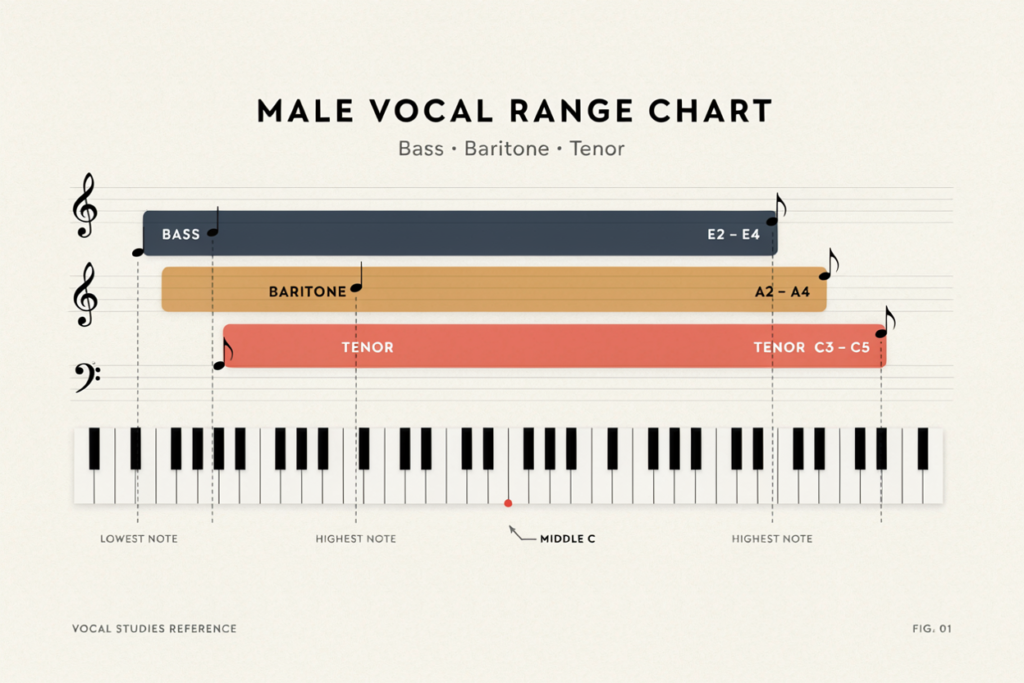
A male vocal range chart shows the approximate singing ranges of
different male voice types, including tenor, baritone, and bass. It
helps singers compare their comfortable notes and understand where their
voice may fit within common vocal classifications.
The three main male classical voice types are tenor, baritone, and bass.
Tenors generally sing the highest notes, baritones occupy the middle
range, and bass voices produce the deepest notes.
A vocal range chart is a helpful reference, but it does not determine
voice type by notes alone. Vocal color, tessitura, and vocal weight are
also important factors.
How to Read a Male Vocal Range Chart
Understanding Notes and Octaves
Musical notes are organized into octaves. For example, C3 is lower than
C4, and C4 is known as middle C.
When reading a vocal range chart:
- The lowest note shows the bottom of a singer’s range.
- The highest note shows the top of a singer’s range.
- The comfortable singing area shows where the voice works naturally.
Lowest Notes vs Comfortable Range
Many singers can reach notes outside their normal range, but those
extreme notes do not always represent their true voice type.
The most useful part of a range chart is understanding where your voice
feels strongest and most controlled.
Male Vocal Range Chart
Male Voice Type Approximate Range Vocal Characteristics
Tenor C3–B4 Bright tone, strong
upper register,
expressive high notes
Baritone A2–A4 Warm tone, rich middle
range, balanced sound
These ranges are general estimates. Individual singers may have wider or
narrower ranges depending on training and natural vocal development.
Tenor Vocal Range Explained
The tenor is the highest standard male classical voice type. Tenors are
known for clear upper notes, brightness, and emotional intensity.
A typical tenor range is around C3 to B4, although trained singers may
extend higher.
Common tenor characteristics include:
- Strong upper register
- Bright vocal tone
- Flexible voice
- Powerful projection
Tenors are often divided into categories such as lyric tenor and
dramatic tenor.
You can learn more about this voice type in the guide to tenor vocal
range.
Baritone Vocal Range Explained
The baritone is the middle male voice type and is one of the most common
male classifications.
A typical baritone range is around A2 to A4.
Baritones usually have:
- Warm and rich vocal tone
- Strong middle register
- Balanced low and high notes
- Powerful chest voice
Baritone voices often appear in opera, musical theatre, pop, and
classical music because of their versatility.
More details are available in this explanation of baritone vocal
range.
Bass Vocal Range Explained
The bass is the lowest standard male voice type. Bass singers are
recognized for deep resonance and strong low notes.
A typical bass range is approximately E2 to E4.
Bass characteristics include:
- Dark vocal color
- Deep resonance
- Strong lower register
- Powerful presence
Some bass singers belong to the basso profundo category, which
represents exceptionally deep voices.
Explore more about this category in the bass vocal range
guide.
What Is the Difference Between Vocal Range and Voice Type?
Vocal range and voice type are connected but different.
Vocal range describes the notes a singer can produce. Voice type
describes the natural characteristics of the voice, including:
- Comfortable singing area
- Tone color
- Vocal weight
- Register transitions
A singer may have a wide range but still belong naturally to one voice
category. This is why classification requires more than measuring notes.
You can learn more about this difference in voice type vs vocal
range.
How to Find Your Male Vocal Range
To estimate your vocal range:
Warm Up First
Start with gentle humming, scales, or vocal exercises before testing
your lowest and highest notes.
Find Your Lowest Comfortable Note
Sing downward gradually until you reach the lowest note you can produce
clearly without forcing.
Find Your Highest Comfortable Note
Move upward gradually and stop when the note becomes strained or
unstable.
Compare Your Results
Compare your comfortable range with the chart above, but remember that
range alone does not fully identify your voice type.
For a more complete approach, see how to find your voice
type.
Male Vocal Range Chart by Voice Level
Voice Category General Position Common Strength
High Tenor Highest male range Upper notes and brightness
Tenor High male voice Melody and projection
Baritone Middle male voice Warmth and versatility
Bass-Baritone Between bass and baritone Depth with flexibility
Bass Lowest male voice Powerful low resonance
Frequently Asked Questions
What is the average male vocal range?
Many male singers have a range of around two octaves, but the exact
range varies depending on training, age, and natural vocal
characteristics.
What is the highest male voice type?
Tenor is the highest standard male classical voice type.
Is baritone lower than tenor?
Yes. Baritone is lower than tenor and sits between tenor and bass.
Can a baritone sing bass notes?
Some baritones can sing lower notes, especially with training, but their
natural vocal qualities may still place them in the baritone category.
How do I know my male voice type?
You can compare your range, comfortable singing area, and vocal tone. A
professional assessment can provide a more accurate classification.

Benjamin Parker is a voice classification and singing analysis writer at VoiceTypeTest. He focuses on vocal type identification, vocal range analysis, pitch recognition, and singing education tools for vocalists, musicians, choir singers, and beginners.