
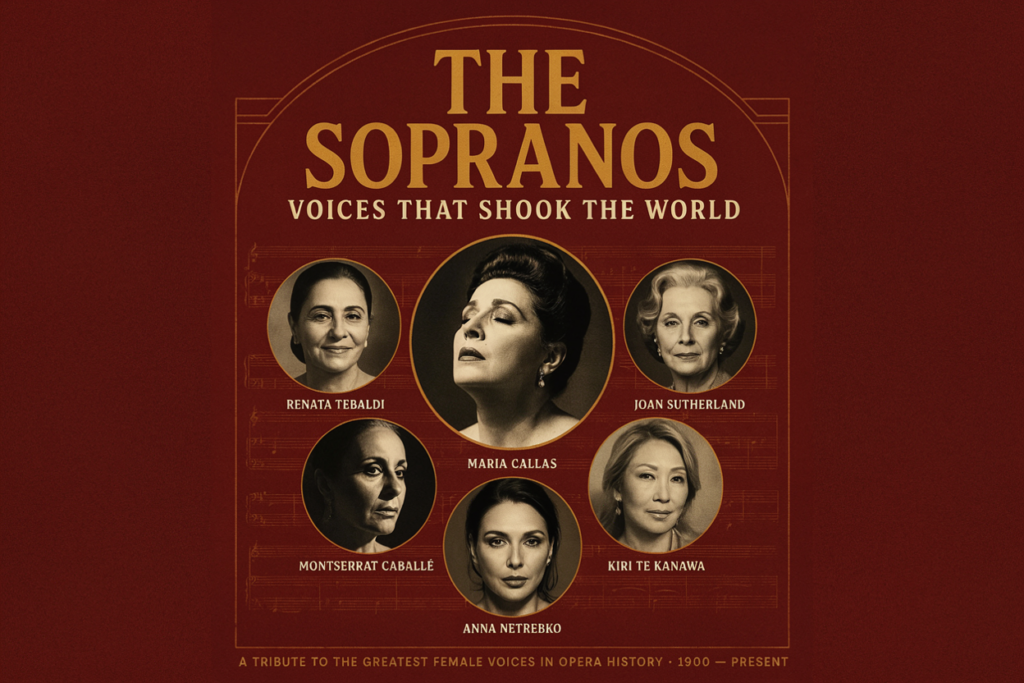
Famous soprano singers are vocalists recognized for their ability to
perform the highest standard female singing roles, especially in
classical music and opera. Legendary sopranos became celebrated not only
for their high notes, but also for vocal technique, interpretation, tone
quality, and their ability to bring characters to life.
The soprano voice is one of the most recognized female voice types.
While many people associate sopranos only with very high notes,
professional classification depends on several factors, including vocal
range, tessitura, vocal weight, and tone color.
Who Are the Most Famous Soprano Singers?
Some of the most famous soprano singers in history include Maria Callas,
Joan Sutherland, Renée Fleming, and Montserrat Caballé. These singers
represent different soprano styles and helped shape the development of
opera through their unique voices and artistic approaches.
A famous soprano is not defined only by reaching high notes. The
greatest sopranos combine technical control, emotional expression, and a
voice that suits specific musical roles.
What Is a Soprano Voice?
A soprano is the highest common female classical voice type. Sopranos
typically sing higher melodies than mezzo-sopranos and contraltos, with
a common range often around C4 to C6.
However, soprano classification is not based only on range. A singer’s
comfortable singing area, known as tessitura, and vocal character are
also important.
You can explore how soprano voices compare with other categories in this
guide to female voice
types.
Soprano Vocal Range and Characteristics
Typical soprano characteristics include:
- Bright and clear tone quality
- Strong upper register
- Ability to perform high melodic lines
- Flexibility for complex musical passages
Individual singers may have wider or narrower ranges depending on
training and natural vocal ability.
Different Types of Soprano Voices
Sopranos are divided into several categories based on vocal weight,
flexibility, and dramatic ability.
Soprano Type Characteristics;
Coloratura soprano Light, flexible voice with advanced
agility
Lyric soprano Warm, smooth tone suited for
expressive melodies
Spinto soprano Powerful voice combining lyric
beauty with dramatic strength
Understanding these categories helps explain why two sopranos with
similar ranges can sound completely different.
Famous Soprano Singers in Opera History
Maria Callas
Maria Callas is widely regarded as one of the most influential opera
sopranos of the 20th century. She became famous for her dramatic
interpretation, emotional expression, and ability to transform opera
characters through her performances.
Her artistry helped redefine expectations for opera singers by combining
vocal technique with powerful storytelling.
Joan Sutherland
Joan Sutherland was one of the most celebrated coloratura sopranos. She
became known for exceptional vocal agility, accuracy, and her ability to
perform demanding high-speed passages.
Her performances helped revive interest in bel canto opera, a style that
emphasizes beautiful tone and vocal control.
Renée Fleming
Renée Fleming is a renowned lyric soprano known for her warm tone,
musical intelligence, and versatility. She has performed a wide range of
opera and concert works while helping introduce classical singing to
broader audiences.
Montserrat Caballé
Montserrat Caballé was admired for her extraordinary vocal control,
smooth phrasing, and ability to produce a powerful sound with elegance.
Her voice became especially recognized for its beauty and technical
refinement.
Famous Soprano Singers and Their Voice Types
Singer Soprano Type Known For
Maria Callas Dramatic/Lyric soprano Emotional opera
interpretation
Joan Sutherland Coloratura soprano Vocal flexibility and
agility
Renée Fleming Lyric soprano Warm and expressive
tone
This comparison shows that soprano voices can vary greatly. The label
“soprano” includes many different vocal personalities.
How Do Famous Sopranos Develop Their Voices?
Breath Support and Vocal Technique
Professional sopranos develop control through years of training focused
on breath management, vocal coordination, resonance, and healthy singing
habits.
High notes require efficient technique rather than simply forcing the
voice upward.
Training and Repertoire Selection
Successful singers choose repertoire that matches their vocal
development. A young soprano may not immediately perform the same roles
as a mature dramatic soprano because vocal strength and endurance
develop over time.
A singer’s classification can become clearer by examining range, comfort
zone, and vocal qualities together. Learning about voice type and vocal
range
differences
helps explain this process.
Famous Soprano Singers vs Modern Female Vocalists
Not every female singer with a high voice is classified as a soprano.
Classical voice classification depends on vocal production, training
style, repertoire, and technical approach.
Popular singers may use high notes and soprano-like qualities, but opera
classification follows different standards.
How to Identify a Soprano Voice
A soprano voice can be identified by looking at:
- Comfortable singing range
- Upper register strength
- Vocal brightness and resonance
- Ability to sustain higher melodies
A complete voice assessment should consider more than the highest note a
singer can reach. A soprano range notes
guide provides
more information about typical soprano ranges.
Frequently Asked Questions
Who is considered the greatest soprano singer?
Many singers are considered among the greatest sopranos, including Maria
Callas, Joan Sutherland, and Renée Fleming. The answer depends on
whether you value historical influence, technical skill, vocal beauty,
or dramatic interpretation.
What makes someone a soprano?
A soprano is identified by a combination of vocal range, tessitura, tone
quality, and vocal characteristics. Singing high notes alone does not
automatically make someone a soprano.
What is the difference between lyric and dramatic soprano?
A lyric soprano usually has a lighter, warmer, and more flexible sound,
while a dramatic soprano has a larger, more powerful voice suited for
intense musical roles.
Can a singer have a soprano vocal range without being a soprano?
Yes. Some singers can reach soprano notes but may have a different voice
classification because their natural tessitura and vocal quality fit
another category.
Who are the most famous female opera singers?
Famous female opera singers include Maria Callas, Joan Sutherland, Renée
Fleming, Montserrat Caballé, and many other internationally recognized
performers.

Benjamin Parker is a voice classification and singing analysis writer at VoiceTypeTest. He focuses on vocal type identification, vocal range analysis, pitch recognition, and singing education tools for vocalists, musicians, choir singers, and beginners.