
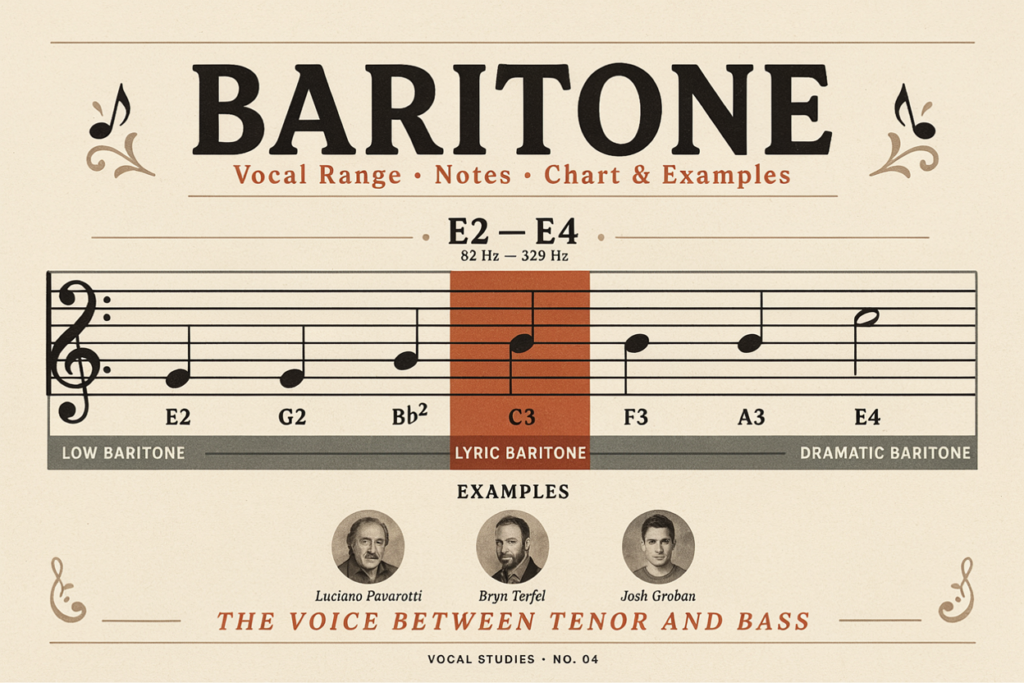
A baritone vocal range is the range of notes typically sung by the
middle male classical voice type, positioned between tenor and bass. A
common baritone range is approximately A2 to A4, although many trained
baritones can extend beyond these notes depending on their technique and
vocal classification.
Baritone voices are known for their warm, rich, and balanced sound. They
often combine the depth of a bass voice with some of the flexibility and
brightness associated with a tenor.
A baritone is not identified only by the lowest or highest note a singer
can reach. Professional voice classification also considers vocal color,
tessitura, which is the area where a voice feels most comfortable, vocal
weight, and resonance.
What Notes Can a Baritone Singer Sing?
A typical male vocal comparison looks like this:
Voice Type Approximate Range Main Characteristics;
Tenor C3–C5 Higher male voice with bright upper register
Baritone A2–A4 Middle male voice with warm and balanced tone
Bass E2–E4 Lowest male voice with deep resonance
The exact baritone vocal range varies between singers. Some baritones
may sing higher notes with strong technique, while others may have a
deeper extension toward bass.
The most important factor is not the extreme notes but where the voice
feels natural. A true baritone usually has a comfortable middle register
where the sound remains full, controlled, and expressive.
The male vocal range
chart provides
a broader view of where baritone fits among male voice categories.
What Makes a Voice a Baritone?
A baritone voice has several characteristics that separate it from tenor
and bass classifications.
Vocal Range and Tessitura
Range describes all notes a singer can produce, while tessitura
describes the notes where the voice sounds strongest and most
comfortable.
Baritones typically feel most natural in the middle male register. They
can sing lower than most tenors while maintaining more upper flexibility
than many bass voices.
Vocal Tone and Weight
Baritone voices are often recognized by their warm, rich, and powerful
tone. The voice usually has more depth than a tenor but more brightness
and flexibility than a bass.
Vocal weight also plays an important role. A heavier baritone may sound
closer to a bass, while a lighter baritone may approach the sound of a
tenor.
Resonance and Register Balance
A skilled baritone develops control across chest voice, mixed voice, and
upper registers. This balance allows the singer to perform a wide
variety of musical styles.
A vocal range test can estimate the notes you can produce, but it cannot
completely determine whether you are a baritone because voice
classification involves more than pitch.
The difference between range and classification is explained further in
the guide about voice type and vocal
range.
What Are the Different Types of Baritone Voices?
Opera and classical music divide baritones into several categories based
on vocal color, power, and role requirements.
Lyric Baritone
A lyric baritone has a smooth, warm, and flexible sound. These singers
often perform roles that require emotional expression and melodic
beauty.
Their voices usually have lighter vocal weight compared with dramatic
baritones.
Dramatic Baritone
A dramatic baritone has a stronger and heavier vocal quality. These
singers are suited for powerful roles that require projection and
intensity.
Verdi Baritone
The Verdi baritone is a specialized category named after the operatic
style of composer Giuseppe Verdi. These singers typically have a strong
upper register combined with dramatic power.
Bass-Baritone
A bass-baritone combines qualities of both bass and baritone voices.
These singers have a darker tone and extended lower range while
maintaining baritone flexibility.
More information about this classification can be found in the overview
of the baritone voice.
Baritone Vocal Range vs Tenor Range: What Is the Difference?
Baritone and tenor voices can overlap, but they have different natural
characteristics.
Feature Baritone Tenor;
Position Middle male voice Higher male voice
Typical Range A2–A4 C3–C5
Tone Warm, rich, balanced Bright, clear, higher-focused
Comfortable Area Middle register Upper register
Common Roles Leaders, dramatic characters Heroes, romantic leads
Some baritones can sing notes commonly associated with tenors, and some
tenors can sing lower passages. The difference is usually found in vocal
center, tone, and comfort rather than a single note.
You can explore the relationship between these categories in the
comparison of tenor vs
baritone.
Baritone Vocal Range vs Bass Range: What Is the Difference?
Baritone and bass voices also overlap, especially at the lower end of
the range.
A bass usually has a deeper vocal color, stronger low resonance, and a
lower comfortable singing area. A baritone generally has more
flexibility in the middle and upper parts of the male range.
A singer reaching low notes does not automatically become a bass. The
overall sound, vocal weight, and natural tessitura determine the
classification.
How Do You Know If You Have a Baritone Voice?
Identifying a baritone voice requires looking at several
characteristics.
Comfortable Middle Notes
Many baritones feel most comfortable singing melodies in the middle male
range. The voice should sound full and relaxed rather than forced.
Vocal Color
A baritone often has a warm and rich tone. However, tone alone cannot
determine classification because singers can have different vocal
qualities within the same category.
Range Development
Training can expand a singer’s range, but natural voice classification
usually remains consistent. A trained teacher considers range,
resonance, and vocal behavior when identifying a voice type.
For a wider understanding of male categories, the guide to male voice
types explains how
baritone compares with other classifications.
Famous Baritone Singers and Their Vocal Characteristics
Baritone singers have played major roles in opera, classical music, and
popular singing.
Famous classical baritones include Dietrich Fischer-Dieskau, known for
his expressive interpretation and refined tone, and Dmitri Hvorostovsky,
recognized for his powerful and elegant baritone voice.
Many popular male singers are also described as having baritone
qualities because of their warm lower voices, although modern music does
not always follow traditional classical classifications.
The famous baritone
singers guide
explores examples of singers associated with this voice category.
How Can Baritone Singers Improve Their Range?
Baritone singers can improve their range and control through healthy
vocal training.
Important areas include:
- Developing steady breath support
- Improving resonance
- Practicing smooth register transitions
- Building upper-range flexibility
- Avoiding unnecessary vocal strain
The goal is not simply to sing higher or lower notes but to develop a
stronger and more expressive instrument.
Singers can also explore voice exercises for
singers to
improve technique and coordination.
Frequently Asked Questions
What is the normal range of a baritone voice?
A typical baritone vocal range is around A2 to A4. Some trained singers
may extend beyond this range depending on their technique and vocal
characteristics.
Is baritone higher than bass?
Yes. Baritone is higher than bass and sits between tenor and bass in
traditional male voice classification.
Can a baritone sing tenor notes?
Some baritones can sing notes associated with the tenor range,
especially with training. However, voice classification depends on
comfort, tone, and vocal characteristics.
Can a baritone become a tenor?
Training can improve range and flexibility, but a singer’s natural voice
type usually remains stable. Some singers may discover that they were
originally classified incorrectly.

Benjamin Parker is a voice classification and singing analysis writer at VoiceTypeTest. He focuses on vocal type identification, vocal range analysis, pitch recognition, and singing education tools for vocalists, musicians, choir singers, and beginners.