
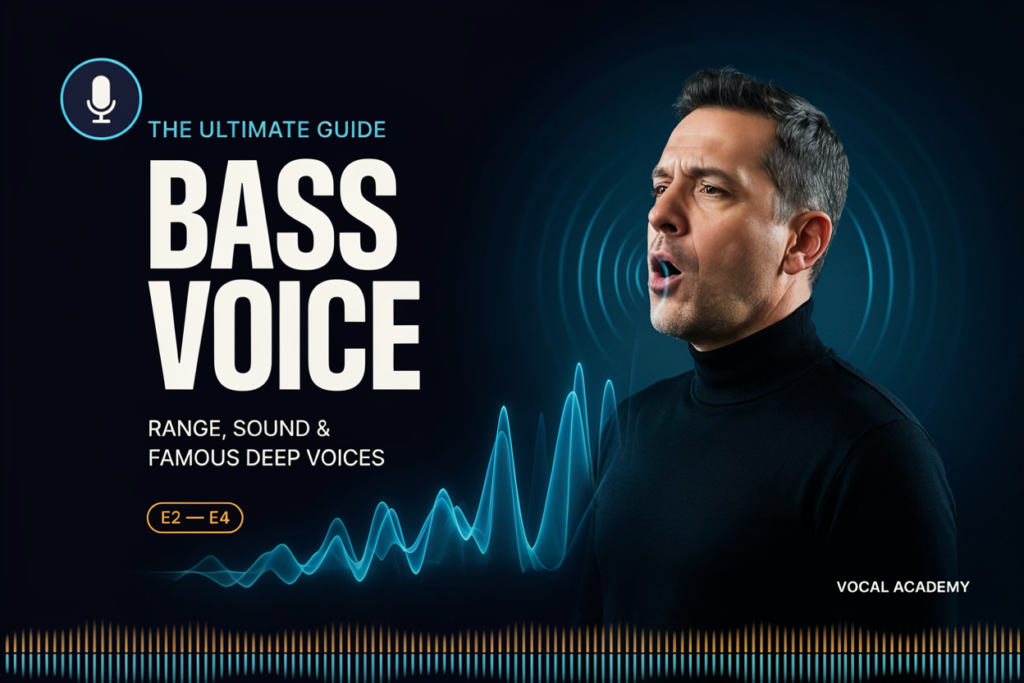
A bass voice type is the lowest common male singing voice type. Bass singers usually have a deep tone, strong low notes, and a low-centered tessitura. In simple male voice order, tenor is higher, baritone sits in the middle, and bass is the lowest.
A typical bass range is often described around E2 to E4, but that range is only a general reference. Voice type is not decided by one low note. A true bass voice depends on usable low range, tessitura, tone, vocal weight, comfort, and repeatability.
Find your approximate vocal classification with our free voice classification test.
What Is a Bass Voice Type?
A bass is the lowest common male voice type. Bass singers usually have a naturally deep sound and feel most comfortable in lower male ranges. Their voices often add depth, weight, and foundation in choir, classical music, gospel, barbershop, musical theater, and some pop or rock settings.
| Male Voice Type | General Position | Simple Description |
|---|---|---|
| Tenor | Higher | Bright, higher male voice |
| Baritone | Middle | Warm, balanced male voice |
| Bass | Lowest | Deep, low male voice |
The key point is this: a bass voice is not just a man who can sing one low note. A real bass should have a lower comfort zone, not only a low extension.
Where Bass Fits Among Male Voice Types
Male voices are commonly grouped into tenor, baritone, and bass. Tenor is the higher male category, baritone is the middle category, and bass is the lower category. Some systems also include countertenor, bass-baritone, and deeper classical subtypes, but tenor, baritone, and bass are the easiest starting points.
The guide to male voice types explains the full beginner system, while male voice classification gives more detail about how singers are grouped by range, tone, tessitura, and function.
Bass voices are important because they provide musical grounding. In choir, the bass section often supports the harmonic foundation. In solo singing, a bass voice can sound powerful, calm, dramatic, warm, or deeply resonant depending on the style.
What Does a Bass Voice Sound Like?
A bass voice usually sounds deep, dark, resonant, grounded, and weighty. It often has a strong lower register and a rich low-middle tone. However, not every bass sounds huge or dramatic. Some bass voices are smooth and lyrical, while others are heavier and more powerful.
Common bass voice qualities include:
- Deep lower range
- Strong low notes
- Darker tone color
- Low-centered tessitura
- Resonant chest voice
- Warmth and weight
- Natural comfort in lower phrases
A bass voice should not sound forced. If a singer has to push the larynx down, press the throat, or use vocal fry to create low notes, that is not a healthy sign of bass voice type.
Bass Vocal Range
A common reference range for bass is around E2 to E4. Some bass singers may sing lower than E2, especially with training or naturally deep voices. Others may not have every note in the reference range but may still have a bass-like tessitura and tone.
The most important question is not “Can I touch this note once?” It is “Can I sing this range clearly, comfortably, and repeatedly?”
A usable bass low note should be:
- Clear enough to hear
- Produced without throat pressure
- Repeatable on different days
- Not only vocal fry
- Comfortable in musical phrases
- Connected to the rest of the voice
For a more detailed range breakdown, read the guide to bass vocal range. It explains how bass range works and why low notes need to be usable, not just technically possible.
Bass vs Baritone
Bass is lower than baritone, but this is one of the most common areas of confusion. Many men can sing some low notes, especially in the morning or after relaxing the voice. That does not automatically make them bass.
A baritone usually has a stronger middle range and a higher natural center than a bass. A baritone may reach bass notes, but those notes may not feel as stable, strong, or comfortable across a full song.
| Feature | Bass | Baritone |
|---|---|---|
| General position | Lowest male type | Middle male type |
| Comfort zone | Lower range | Middle-low range |
| Tone | Deeper, darker, heavier | Warm, balanced, flexible |
| Common confusion | One low note mistaken for bass | Deep tone mistaken for bass |
| Main clue | Low tessitura feels natural | Middle range feels strongest |
The guide to the baritone voice can help you compare the middle male type, while baritone vocal range explains where baritone range often overlaps with bass.
Bass-Baritone and Basso Profondo
Some singers feel they are between baritone and bass. This is where the term bass-baritone may appear. A bass-baritone usually has qualities of both types: more low depth than many baritones, but more upper flexibility than many true basses.
Another term is basso profondo, which refers to an especially deep bass voice. This is more common in classical or choral discussions and should not be used casually just because someone has a deep speaking voice.
For beginners, the safest path is simple: first decide whether your voice feels more naturally baritone or bass. More specific labels can come later with training and experience.
How to Know If You Are a Bass
You may be a bass if several of these feel true:
- Low phrases feel comfortable and natural
- Your low notes are clear, not only breathy or fried
- Your middle-low range feels stronger than your upper range
- High baritone or tenor songs feel tiring
- Your tone has natural depth without forcing
- You can repeat low notes on different days
- Choir bass parts feel more comfortable than tenor or baritone-like lines
A singing voice test can help you explore your usable range. A pitch detector can help you identify the exact notes you sing, while a voice analyzer can help you observe pitch behavior and consistency. If you are curious about deep voice frequency, a voice frequency test can add extra context.
Range Is Not Enough: Tessitura and Comfort
Range alone does not decide whether you are a bass. You may be able to hit a low note once, but if that note is weak, forced, or only possible in vocal fry, it should not define your voice type.
The better clue is tessitura. Tessitura means the part of your range where your voice feels most comfortable, clear, and repeatable. A bass voice usually has a lower tessitura than a baritone. That means lower phrases feel more natural, not just possible.
The guide on voice type vs vocal range explains why range and voice type are not the same thing, and the article on what tessitura means explains the comfort-zone concept in more detail.
Common Mistakes About Bass Voices
Avoid these common mistakes:
- Thinking a deep speaking voice always means bass
- Counting vocal fry as healthy bass range
- Calling yourself bass from one low note
- Forcing your throat downward to sound deeper
- Ignoring baritone overlap
- Assuming choir bass placement always means true bass voice type
- Treating bass as better because it is lower
- Testing only in the morning when the voice may feel deeper
A bass label should help you sing safely and naturally. It should not make you force low notes or avoid songs that fit your real comfort zone.
Famous Bass Singers and Listening Examples
Listening to bass singers can help you understand the sound of the voice type, but examples should be used carefully. Studio production, microphones, genre style, and song key can make voices sound lower or heavier than they naturally are.
The guide to famous bass singers can help you hear how different bass voices may sound. Some basses are dark and dramatic, while others are smoother, warmer, or more lyrical.
Bass is also often discussed as one of the rarer male categories. The article on the rarest voice type explains why true bass voices are less common than baritones in many singing contexts.
FAQ
What is a bass voice type?
A bass voice type is the lowest common male singing voice type. It usually has a deep tone, strong low notes, and a low-centered tessitura.
Is bass the lowest male voice type?
Yes. Bass is the lowest common male voice type. Some deeper bass subtypes, such as basso profondo, may extend even lower.
What is the range of a bass voice?
A typical bass range is often described around E2 to E4, but exact ranges vary by singer, training, and classification system.
How do I know if I am a bass?
You may be a bass if your low range feels natural, your low notes are clear and repeatable, and your voice feels centered lower than a typical baritone.
Is bass lower than baritone?
Yes. Bass is generally lower than baritone and usually has a lower tessitura.
Can a baritone sing bass notes?
Yes. Some baritones can sing bass-range notes, but that does not automatically make them basses. Tessitura and comfort matter more.
Does a deep speaking voice mean I am bass?
Not always. Speaking voice can give clues, but singing range, tessitura, tone, and comfort are more important.
What is bass-baritone?
Bass-baritone is a voice category between baritone and bass. It usually has some bass depth with more baritone-like flexibility.
What is basso profondo?
Basso profondo is an especially deep bass voice type, usually discussed in classical or choral contexts.
Is bass voice rare?
True bass voices are often considered less common than baritone voices. However, rarity depends on how voice types are defined and measured.
Final Note
A bass voice type is the lowest common male voice type, known for depth, resonance, and a low-centered tessitura. But bass is not decided by one low note, vocal fry, or a deep speaking voice.
To know if you are bass, test your usable range, notice your tessitura, and focus on comfort and repeatability. The right voice type label should help you sing more naturally, not push your voice into an artificial sound.

Benjamin Parker is a voice classification and singing analysis writer at VoiceTypeTest. He focuses on vocal type identification, vocal range analysis, pitch recognition, and singing education tools for vocalists, musicians, choir singers, and beginners.