
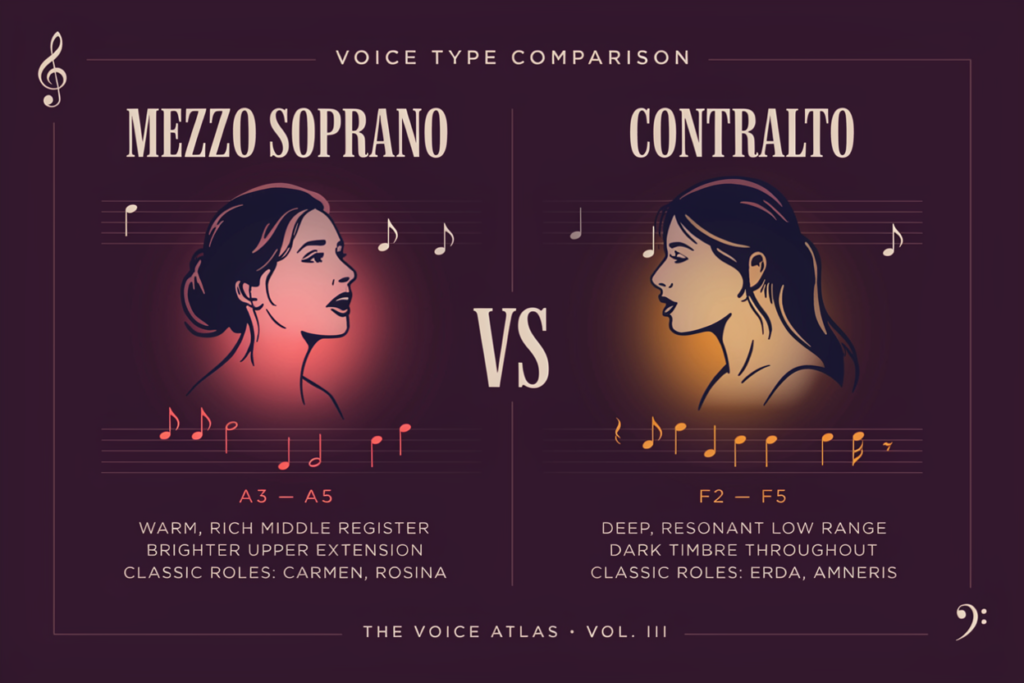
A mezzo-soprano is a female singing voice that sits between soprano and
contralto, while a contralto is the lowest classical female voice type.
The main differences are not only their vocal ranges but also their
natural vocal color, comfortable singing area (tessitura), and vocal
weight.
A mezzo-soprano usually has a warm, rich, and flexible sound with
strength in the middle register. A contralto has a deeper, darker, and
heavier tone, with a naturally comfortable lower range.
Understanding the difference between these voice types requires looking
beyond the highest and lowest notes a singer can produce.
What Is a Mezzo-Soprano?
Mezzo-Soprano Range and Characteristics
A mezzo-soprano is often considered the middle female voice type. The
typical range is around A3 to A5, although individual singers may extend
higher or lower depending on training and vocal development.
Mezzo-sopranos usually have:
- A strong middle register
- A warm and rounded vocal tone
- Good flexibility between chest voice and head voice
- Powerful lower notes compared with sopranos
Many mezzo-sopranos perform roles that require emotional depth,
strength, and dramatic expression. You can explore more about this
classification through the guide to mezzo-soprano
voice.
Famous Mezzo-Sopranos
Well-known mezzo-sopranos include Cecilia Bartoli and Elīna Garanča.
Their voices demonstrate the combination of warmth, agility, and
expressive power associated with this classification.
You can also explore examples of performers through famous
mezzo-soprano
singers.
What Is a Contralto?
Contralto Range and Characteristics
A contralto is the lowest female classical voice type. A typical
contralto range is approximately F3 to F5, though true contraltos vary
significantly between singers.
Contraltos are known for:
- Exceptionally deep female vocal tones
- Dark and rich vocal color
- Strong lower register
- Naturally powerful chest voice
True contraltos are considered rare because relatively few female
singers have the naturally low tessitura and vocal qualities required
for the classification.
The detailed characteristics of this voice type are explained in the
contralto vocal range
guide.
Mezzo-Soprano vs Contralto: Vocal Range Comparison
Feature Mezzo-Soprano Contralto
Voice Position Middle female voice Lowest female voice
Typical Range Around A3–A5 Around F3–F5
Vocal Color Warm, bright, flexible Dark, deep, powerful
Comfortable Area Middle register Lower register
Rarity More common Very rare
Although the ranges overlap, the biggest difference is usually where the
voice feels most comfortable. A singer may be able to reach contralto
notes but still be a mezzo-soprano if the middle range is where the
voice naturally resonates.
Why Are Mezzo-Sopranos and Contraltos Often Confused?
Range Alone Does Not Define Voice Type
A common mistake is identifying voice type only by the highest and
lowest notes a singer can hit. Vocal classification also considers:
- Tessitura, the range where the voice sounds strongest and most
comfortable - Vocal tone and resonance
- Register transitions
- Vocal weight and power
A mezzo-soprano with strong low notes is not automatically a contralto.
Likewise, a contralto may not always sing extremely low notes.
Understanding the difference between range and classification is
important. You can learn more about this topic in the article about
voice type vs vocal
range.
How Can You Tell If You Are a Mezzo-Soprano or Contralto?
The most reliable way to identify your voice type is to examine your
complete vocal profile rather than a single note.
Consider these factors:
Comfortable Singing Range
Notice where your voice feels natural without forcing. Mezzo-sopranos
usually feel most comfortable in the middle range, while contraltos
often feel stronger in lower areas.
Vocal Tone
A naturally darker, heavier, and deeper sound may indicate contralto
qualities. A warmer but more flexible sound often matches mezzo-soprano characteristics.
Professional Classification
Voice teachers usually evaluate range, tessitura, tone quality, and
register changes together. A home vocal test can provide an estimate,
but it cannot replace a complete vocal assessment.
If you want to understand how voice categories are identified, see how
to find your voice
type.
Famous Mezzo-Sopranos and Contraltos
Both voice types have produced famous singers with unique vocal
identities.
Mezzo-soprano examples: – Cecilia Bartoli – Elīna Garanča – Frederica
von Stade
Contralto examples: – Marian Anderson – Kathleen Ferrier – Ewa Podleś
The difference is not about which voice is better. Each classification
has unique strengths, from the mezzo-soprano’s versatility to the
contralto’s rare depth.
Can a Mezzo-Soprano Become a Contralto?
A singer generally cannot change their natural voice type completely.
Training can improve range, control, and vocal technique, but the
underlying characteristics of the voice usually remain stable.
A mezzo-soprano may develop stronger low notes, and a contralto may
extend upward with training, but their natural vocal identity usually
stays the same.
Frequently Asked Questions
Is contralto lower than mezzo-soprano?
Yes. Contralto is considered the lowest female classical voice type,
while mezzo-soprano sits between soprano and contralto.
Can a mezzo-soprano sing contralto songs?
Yes. Many mezzo-sopranos can perform lower songs, especially with
training. However, the vocal color and comfortable range may differ from
a true contralto.
Is contralto the rarest female voice type?
True contralto voices are among the rarest female voice classifications
because they require a naturally deep range and darker vocal quality.
How do I know if I am a mezzo-soprano?
You are more likely to be a mezzo-soprano if your voice feels strongest
in the middle range and has a warm, flexible tone.
What is the difference between alto and contralto?
Alto is often used as a choir part, while contralto is a specific
classical voice classification. Many altos are not true contraltos.

Benjamin Parker is a voice classification and singing analysis writer at VoiceTypeTest. He focuses on vocal type identification, vocal range analysis, pitch recognition, and singing education tools for vocalists, musicians, choir singers, and beginners.