
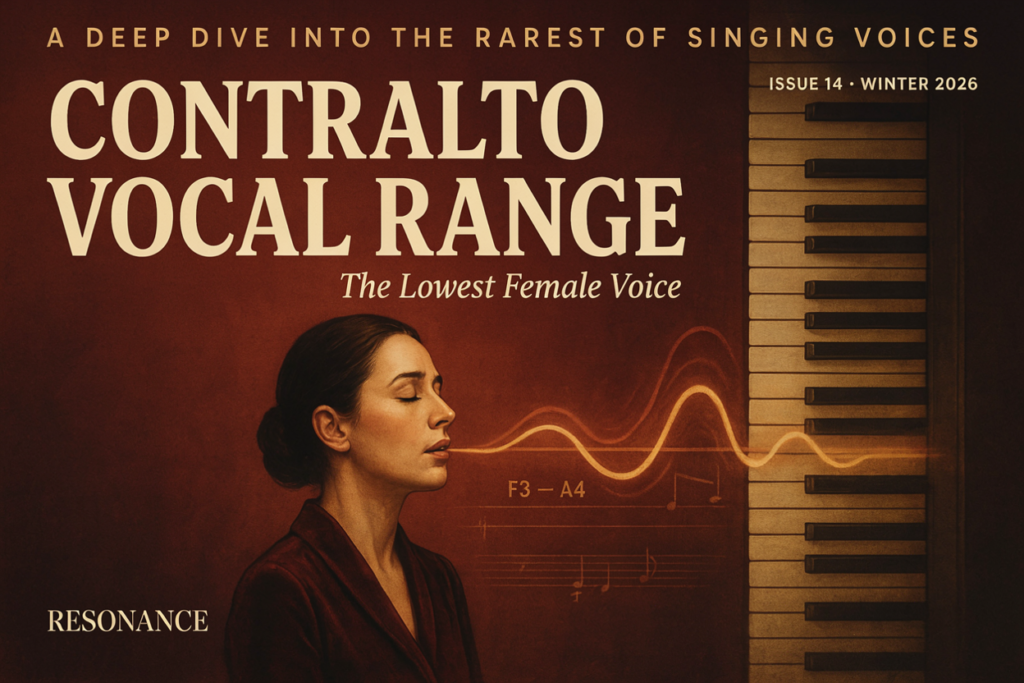
A contralto vocal range is the lowest standard female classical voice
category, typically covering approximately E3 to E5. Contraltos are
known for deep resonance, rich vocal color, and a naturally strong lower
register. However, a true contralto is not identified only by singing
low notes. Voice classification also depends on tessitura, vocal weight,
tone quality, and where the voice feels most comfortable.
Contralto voices are among the rarest female voice types. Many singers
with lower female voices are classified as mezzo-sopranos because their
natural vocal center and tone characteristics fit that category better.
What Is the Contralto Vocal Range?
The contralto vocal range describes the typical notes a true contralto
singer can produce comfortably. In classical voice classification,
contralto represents the lowest female voice type.
A common contralto range is:
Voice Type Approximate Range Characteristics;
Contralto E3–E5 Deep, dark, rich vocal color
Alto F3–F5 Lower choir voice part
Mezzo-soprano A3–A5 Middle female classical voice
Soprano C4–C6 Highest female classical voice
These ranges are general guidelines. Individual singers may have wider
or narrower ranges depending on anatomy, training, and vocal
development.
What Makes a Contralto Voice Unique?
A contralto voice is different from other female voices because of its
natural depth and resonance.
Deep Resonance and Vocal Color
Contraltos often have a darker and warmer tone compared with sopranos
and mezzo-sopranos. Their voices can create a powerful emotional effect
because of their rich lower frequencies.
Strong Lower Register
A true contralto usually has a naturally strong lower range. Lower notes
feel comfortable and stable rather than forced.
Natural Tessitura
Tessitura, the area where a voice sounds and feels most comfortable, is
one of the most important parts of identifying a contralto.
A singer may reach contralto notes but still not be a contralto if their
strongest vocal area belongs higher in the voice.
You can learn more about how comfort range affects classification in
this explanation of what tessitura
means.
Contralto Range in Hz
Musical notes can also be measured by frequency in Hertz (Hz). Lower
notes have slower vocal fold vibrations, while higher notes have faster
vibrations.
Note Approximate Frequency;
E3 165 Hz
A3 220 Hz
E4 330 Hz
E5 659 Hz
Frequency helps measure pitch, but it does not completely determine
voice type. Two singers can produce similar frequencies while having
different vocal qualities.
Contralto vs Alto vs Mezzo-Soprano: What Is the Difference?
Many beginners confuse contralto with alto and mezzo-soprano. Although
these voices overlap, they are not identical.
Category Contralto Alto Mezzo-Soprano;
Classification Classical female Choir voice part Classical female
voice type voice type
Range Position Lowest female Lower singing Between soprano
category part and contralto
Tone Deep and dark Lower and Warm and rich
balanced
A singer with a low voice is not automatically a contralto. The complete
vocal picture includes range, resonance, and tessitura.
The difference between these categories is explained further in the
comparison of alto and contralto
voices.
Famous Contralto Singers and Their Vocal Qualities
Some of the most recognized contralto singers include Marian Anderson,
Kathleen Ferrier, and Ewa Podleś.
Marian Anderson became famous for her powerful and expressive contralto
voice. Kathleen Ferrier was admired for her warm tone and emotional
interpretation. Ewa Podleś demonstrated that contralto voices can
combine deep resonance with impressive flexibility.
These singers show that contralto is not only about low notes. Artistic
expression, vocal control, and unique tone quality are equally
important.
You can explore more examples in this guide to famous contralto
singers.
How to Know If You Have a Contralto Voice
Finding your voice type requires more than discovering your lowest note.
Test Your Comfortable Singing Range
Start by identifying the lowest and highest notes you can sing
comfortably with a clear tone. Notes that require pushing or tension
should not be considered part of your practical range.
Identify Your Tessitura
Notice where your voice feels strongest during normal singing. A
contralto usually feels most comfortable in a lower female range.
Analyze Tone Quality
Contralto voices often have:
- Dark vocal color
- Strong lower resonance
- Full chest register
- Rich vocal texture
A complete voice assessment considers all these factors together.
You can compare your results with broader female classifications using
this guide to female voice
types.
Can Contralto Vocal Range Increase?
Yes, singers can often expand their usable range through proper
training. Breath support, resonance exercises, and healthy vocal
technique can improve flexibility and control.
However, training does not completely change natural vocal anatomy. A
singer may extend their range while their natural voice type remains
similar.
Understanding the difference between range and classification is
important. A singer’s highest or lowest note alone does not define their
voice type. More details are available in the guide about voice type
and vocal range differences.
Frequently Asked Questions
What notes can a contralto sing?
A typical contralto range is approximately E3 to E5. Some trained
contraltos may sing outside this range depending on their vocal ability
and technique.
Is contralto the lowest female voice?
Yes. Contralto is generally considered the lowest standard female
classical voice type.
How do I know if I am a contralto?
A true contralto is identified by a combination of low range, dark tone
quality, strong lower register, and comfortable tessitura.
What is the difference between alto and contralto?
Alto is usually a choir voice part, while contralto is a classical voice
classification based on vocal characteristics.
Are true contraltos rare?
Yes. True contraltos are considered rare because many low female voices
are classified as mezzo-sopranos instead.

Benjamin Parker is a voice classification and singing analysis writer at VoiceTypeTest. He focuses on vocal type identification, vocal range analysis, pitch recognition, and singing education tools for vocalists, musicians, choir singers, and beginners.