
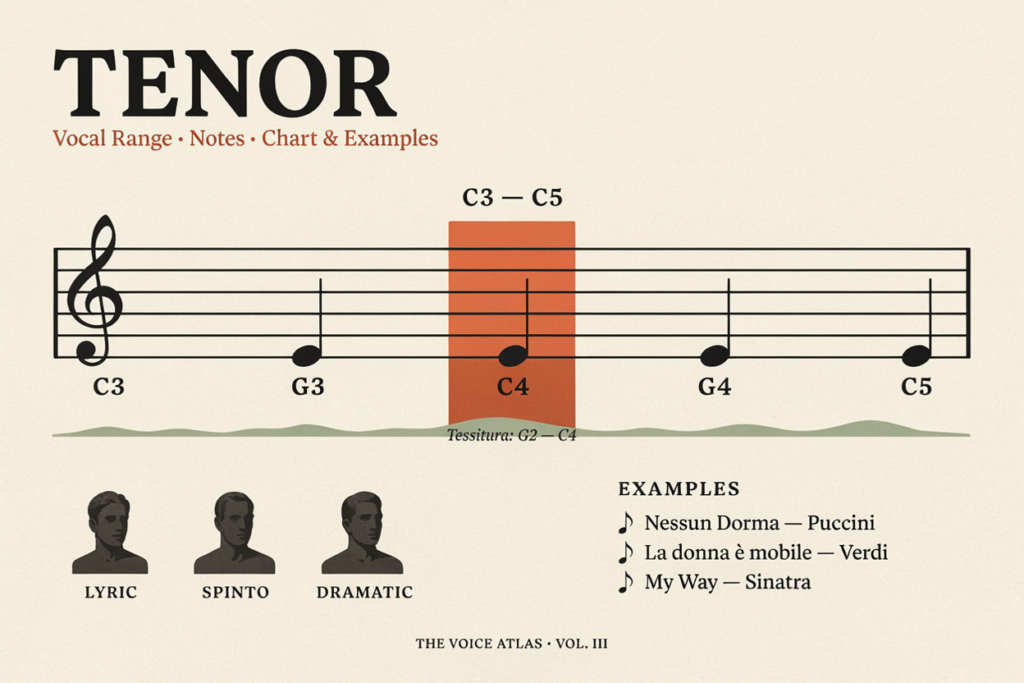
A tenor vocal range is the range of notes typically sung by the highest
standard male voice type in classical music. A common tenor range is
approximately C3 to C5, although many trained tenors can extend above or
below these notes depending on their vocal development and
classification.
A tenor is not defined only by reaching high notes. Professional voice
classification also considers vocal color, tessitura, which is the range
where the voice feels most comfortable, vocal weight, and the overall
character of the sound.
Tenors are commonly found in opera, classical singing, musical theatre,
and many modern music styles. Their bright upper register and ability to
project high melodies make them one of the most recognizable male voice
categories.
What Notes Can a Tenor Sing?
The typical tenor vocal range is:
Voice Type Approximate Range Main Characteristics;
Tenor C3–C5 High male voice with strong upper register
Baritone A2–A4 Middle male voice with rich tone
Bass E2–E4 Lowest male voice with deep resonance
The exact range varies between singers. Some tenors may comfortably sing
higher notes such as C5, D5, or beyond with proper technique, while
others may have a smaller but naturally strong tenor range.
A singer’s comfortable range is usually more important than their
extreme notes. A tenor should be able to sing higher passages with
control, clarity, and consistent tone rather than simply reaching a high
pitch once.
If you want to compare different male classifications, the male vocal
range chart
shows how tenor fits alongside baritone and bass.
What Makes a Voice a Tenor?
A tenor voice has several characteristics that separate it from other
male voice types.
Vocal Range and Tessitura
Range describes all notes a singer can produce, while tessitura
describes the area where the voice sounds strongest and feels most
natural.
A tenor usually has a comfortable upper register compared with baritones
and basses. Many tenor roles require sustained singing in the higher
part of the male range.
Vocal Tone and Weight
Tenors generally have a brighter and lighter vocal quality compared with
baritones. However, some tenor subtypes have a heavier and more dramatic
sound.
The tone of a tenor can vary greatly. Some voices are clear and
youthful, while others are powerful and intense.
Register Transitions
Tenors must develop smooth movement between chest voice, mixed voice,
and head voice. Managing these transitions allows singers to perform
high notes without forcing the sound.
A vocal range test can estimate your available notes, but it cannot
fully determine whether you are a tenor. Voice classification also
requires evaluating tone, comfort, and vocal behavior.
The difference between notes you can reach and your natural category is
explained further in the guide about voice type and vocal
range.
What Are the Different Types of Tenor Voices?
Opera and classical singing divide tenors into several subcategories
based on vocal characteristics and dramatic ability.
Lyric Tenor
A lyric tenor has a bright, smooth, and expressive sound. These singers
often perform romantic roles because their voices combine beauty with
emotional flexibility.
Lyric tenors usually have a lighter vocal weight and emphasize warmth,
clarity, and melodic expression.
Spinto Tenor
A spinto tenor combines the flexibility of a lyric tenor with additional
dramatic power. These voices can handle both gentle melodies and more
intense musical passages.
Spinto tenors are often used for roles that require emotional strength
without the heavier sound of a dramatic tenor.
Dramatic Tenor
A dramatic tenor has a powerful, heavier voice designed for demanding
roles. These singers need strong projection and endurance to perform
over large orchestras.
Heldentenor
Heldentenor is a German operatic category describing a powerful tenor
voice suited for heroic roles, especially in German opera traditions.
Tenor Vocal Range vs Baritone Range: What Is the Difference?
Tenor and baritone voices can overlap, which sometimes makes
classification difficult.
Feature Tenor Baritone;
Position Higher male voice Middle male voice
Typical Range C3–C5 A2–A4
Tone Often brighter and lighter Usually warmer and fuller
Comfortable Area Higher tessitura Middle tessitura
Common Roles Heroes, romantic leads Leaders, dramatic characters
Some baritones can sing high notes, and some tenors can sing lower
notes. The difference is usually found in where the voice feels
strongest and most natural.
You can explore more about this comparison through tenor vs baritone
differences.
How Do You Know If You Are a Tenor?
Identifying a tenor voice requires looking at several factors.
Your Comfortable High Notes
A tenor usually feels comfortable singing higher male melodies without
strain. Notes around the upper middle register should feel sustainable
rather than forced.
Your Natural Vocal Color
Many tenors have a brighter or clearer tone compared with lower male
voices. However, tone alone cannot determine classification.
Your Singing Experience
Training affects range. A beginner may not yet access the full tenor
range, while an experienced singer may develop additional notes through
technique.
For a complete understanding of male classifications, the overview of
male voice types
explains how tenor compares with other categories.
Famous Tenors and Their Vocal Characteristics
Many famous singers demonstrate the variety within the tenor category.
Luciano Pavarotti is known for his powerful yet clear lyric tenor voice
and exceptional upper register. Plácido Domingo is recognized for his
versatility and ability to perform a wide range of operatic roles. José
Carreras is also famous for his expressive lyric tenor style.
Modern singers may also have tenor characteristics, although popular
music does not always follow traditional classical classification
systems.
The famous tenor
singers guide
explores examples of singers associated with this vocal category.
How Can Tenors Improve Their Vocal Range?
Tenors can improve their singing ability through healthy technique and
consistent practice.
Important areas include:
- Developing proper breath support
- Building vocal flexibility
- Practicing smooth register transitions
- Avoiding pushing or forcing high notes
- Maintaining vocal health
Exercises should focus on control and coordination rather than simply
increasing the highest note a singer can reach.
The goal is not only to expand range but also to make the existing range
stronger, clearer, and more reliable.
For singers working on technique, voice exercises for
singers
can provide useful training concepts.
Frequently Asked Questions
What is the normal range of a tenor voice?
A typical tenor vocal range is around C3 to C5. Some trained tenors can
sing beyond this range depending on their technique and voice
classification.
Is tenor higher than baritone?
Yes. Tenor is generally the higher male voice type, while baritone sits
between tenor and bass.
Can a baritone become a tenor?
A singer’s natural voice type usually does not completely change, but
training can expand range and improve access to higher notes. Some
singers may discover that they were incorrectly classified earlier.
What is the highest note a tenor can sing?
There is no single highest note for all tenors. Some trained singers can
reach notes above C5, but classification depends more on vocal quality
and comfortable range than on maximum pitch.

Benjamin Parker is a voice classification and singing analysis writer at VoiceTypeTest. He focuses on vocal type identification, vocal range analysis, pitch recognition, and singing education tools for vocalists, musicians, choir singers, and beginners.