
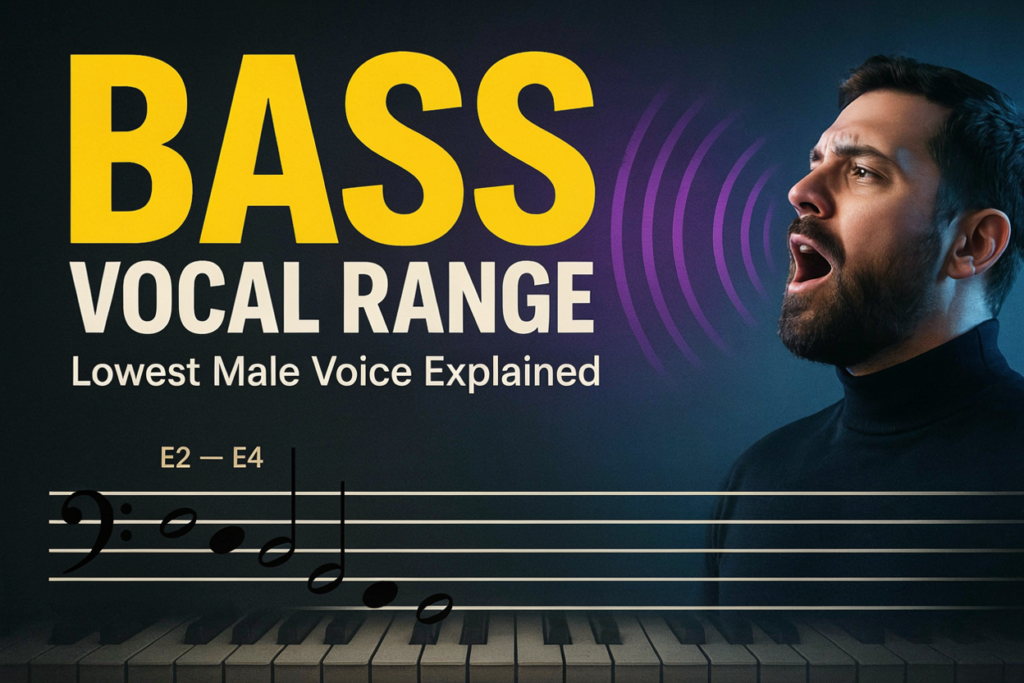
A bass vocal range is the range of notes typically sung by the lowest
standard male voice type. A common bass range is approximately E2 to E4,
although trained bass singers may extend beyond these notes depending on
their vocal development, technique, and classification.
A bass voice is recognized not only by low notes but also by its deep
resonance, dark vocal color, and comfortable lower tessitura, which is
the area where the voice sounds strongest and most natural.
Bass singers are important in opera, choir music, classical singing, and
many modern vocal styles because they provide depth, foundation, and
harmonic support.
What Notes Can a Bass Singer Sing?
A typical bass vocal range is:
Voice Type Approximate Range Main Characteristics;
Bass E2–E4 Lowest male voice with deep resonance
Baritone A2–A4 Middle male voice with balanced tone
Tenor C3–C5 Higher male voice with strong upper register
The exact range differs between singers. Some bass singers can reach
lower notes, while others may have a higher extension with a lighter
bass quality.
A professional bass classification depends more on the notes a singer
can sing comfortably and consistently rather than the single lowest note
they can produce.
For a broader comparison of male categories, the male vocal range
chart shows how
bass fits alongside tenor and baritone voices.
What Makes a Voice a Bass?
A true bass voice has several characteristics beyond a low pitch range.
Range and Tessitura
Range describes the complete group of notes a singer can produce, while
tessitura describes the part of the range where the voice feels most
comfortable.
A bass singer usually feels natural singing in the lower male register.
Their voice maintains strength, clarity, and resonance when performing
lower melodies.
Vocal Tone and Resonance
Bass voices are known for deep and rich vocal colors. The sound often
has strong resonance, which allows bass singers to create a powerful
foundation in both solo and ensemble music.
Two singers may reach similar low notes but sound completely different.
One may be a low baritone, while another may have the darker resonance
associated with a bass.
Vocal Weight
Vocal weight describes how light or heavy a voice sounds. Bass voices
generally have more vocal weight compared with higher male voice types.
This quality helps bass singers perform roles that require authority,
strength, or dramatic presence.
Bass Vocal Range vs Baritone Range: What Is the Difference?
Bass and baritone voices overlap, which can make classification
challenging. The main difference is usually found in where the voice
feels strongest and how the sound quality develops.
Feature Bass Baritone;
Position Lowest standard male Middle male voice
voice
Typical Range E2–E4 A2–A4
Tone Deep, dark, powerful Warm, rich, flexible
Comfortable Area Lower tessitura Middle tessitura
A baritone may be able to sing some bass notes, and a bass may sing
higher passages, but their natural vocal center is different.
The difference between range and classification is explained further in
the guide about voice type and vocal
range.
What Are the Different Types of Bass Voices?
Opera and classical singing divide bass voices into several categories
based on tone, flexibility, and dramatic ability.
Basso Profundo
Basso profundo is the deepest bass category. These singers have
extremely powerful low notes and a dark, commanding sound.
This voice type is often used for serious, imposing, or powerful
characters in opera.
Basso Cantante
Basso cantante means “singing bass” and describes a bass voice with more
melodic flexibility and smoother vocal movement.
These singers combine the depth of a bass with expressive musical
phrasing.
Lyric Bass
A lyric bass has a lighter and more flexible sound compared with a
dramatic bass. This voice type focuses on warmth, smoothness, and
musical expression.
Dramatic Bass
A dramatic bass has greater vocal power and weight. These singers are
suited for demanding opera roles requiring strong projection and
emotional intensity.
More information about classical bass categories can be found in the
overview of bass voice
classification.
How Do You Know If You Have a Bass Voice?
Identifying a bass voice requires looking at several factors, not just
the lowest note you can reach.
Your Comfortable Low Notes
A bass singer usually feels comfortable singing lower melodies without
forcing the sound. The lower register should feel natural and stable.
Your Vocal Color
Many bass voices have a darker, fuller sound compared with baritones and
tenors. This vocal color remains noticeable across different notes.
Your Vocal Classification
A vocal coach or trained singer usually considers range, tessitura,
resonance, and vocal development when identifying a bass voice.
An online vocal range check can estimate your available notes, but it
cannot completely determine your voice type because classification
involves qualities beyond pitch.
The complete male voice
types guide explains
how bass compares with other male classifications.
Famous Bass Singers and Their Vocal Characteristics
Bass singers have played important roles throughout opera and classical
music history.
Famous bass performers include Feodor Chaliapin, known for his dramatic
expression and powerful interpretation, and Cesare Siepi, recognized for
his rich and elegant bass tone.
In modern music, some singers have very low voices, although popular
singing does not always follow traditional classical voice
classification systems.
A singer can have a deep voice without necessarily being classified as
an operatic bass.
How Can Bass Singers Improve Their Range?
Bass singers can improve their vocal ability by developing control,
resonance, and healthy technique.
Important areas include:
- Building steady breath support
- Improving vocal resonance
- Developing smooth register transitions
- Avoiding forcing extremely low notes
- Maintaining vocal health
The goal of training is not only to sing lower notes but to create a
stronger, more controlled, and expressive voice.
Singers can also explore general voice exercises for
singers to
improve technique and coordination.
Frequently Asked Questions
What is the normal range of a bass voice?
A typical bass vocal range is around E2 to E4. Some trained bass singers
may extend beyond this range depending on their technique and vocal
classification.
Is bass lower than baritone?
Yes. Bass is generally lower than baritone and represents the lowest
standard male classical voice category.
Can a baritone become a bass?
Training can expand a singer’s range, but a person’s natural voice type
usually remains stable. Some singers may discover that their original
classification was inaccurate.
What is the lowest note a bass can sing?
There is no single lowest note for every bass singer. Some basses can
sing below E2, but classification depends on overall vocal
characteristics rather than one extreme note.

Benjamin Parker is a voice classification and singing analysis writer at VoiceTypeTest. He focuses on vocal type identification, vocal range analysis, pitch recognition, and singing education tools for vocalists, musicians, choir singers, and beginners.