
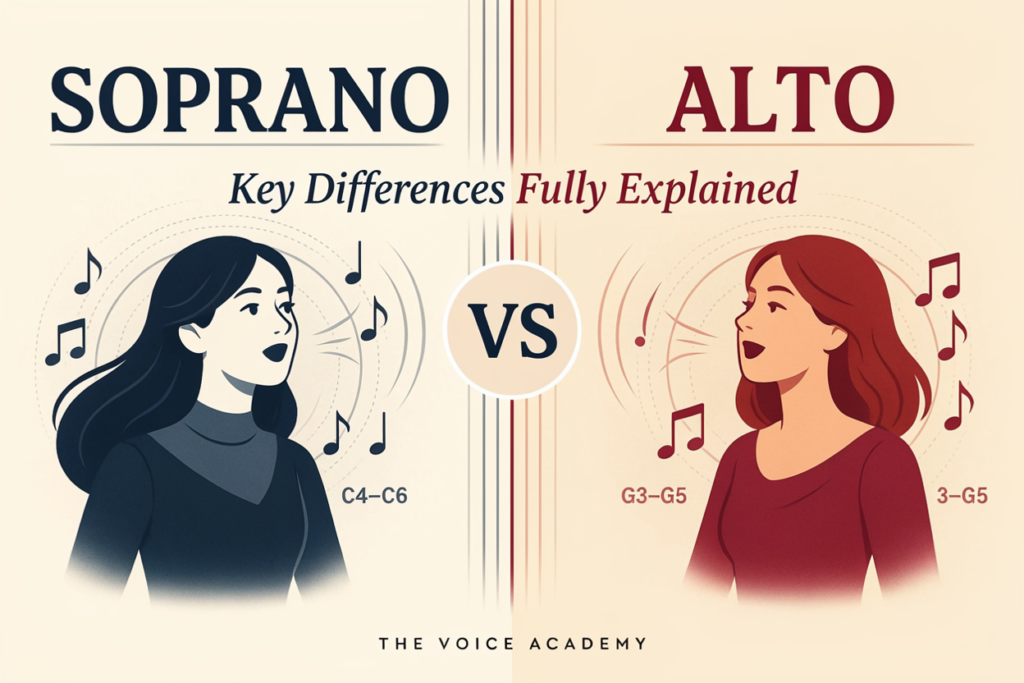
The main difference between soprano and alto is pitch position: soprano is generally higher, while alto is generally lower. In choir, sopranos often sing the melody or upper harmony, while altos usually sing lower harmony parts that add warmth, depth, and balance.
That does not mean soprano is better than alto. Higher only describes where the part sits. Alto parts can be just as difficult because they often require strong pitch independence, blend, and harmony skills.
Want to know your singing voice type? Try our Voice Type Test.
What Is the Difference Between Soprano and Alto?
Soprano is the higher female choir part or voice label, while alto is the lower female choir part. Sopranos often sing higher melodies, and altos often sing lower harmonies.
| Feature | Soprano | Alto |
|---|---|---|
| General pitch | Higher | Lower |
| Common choir role | Melody or upper harmony | Lower harmony |
| Typical tone | Bright, lifted, clear | Warm, grounded, supportive |
| Common challenge | Relaxed high notes | Holding harmony independently |
| Related voice type | Soprano | Mezzo-soprano or contralto |
Both parts are musically important. A strong soprano line can add brightness and lift, while a strong alto line can make the harmony sound rich and complete.
What Is a Soprano?
A soprano is usually the highest common female voice type and the higher female choir part. Sopranos often sing bright, clear, lifted lines and may carry the main melody in many choir arrangements.
A soprano voice may sound light, agile, powerful, dramatic, or ringing depending on the singer and style. In pop music, musical theater, choir, and classical singing, soprano parts often sit higher than alto parts.
If higher melodies feel natural and lower harmony parts feel too heavy, you may lean soprano. The full guide to the soprano voice explains this voice type in more detail.
What Is an Alto?
An alto is usually the lower female part in choir. Alto lines often support the harmony instead of carrying the melody. This can make alto singing challenging because the part may not follow the tune everyone recognizes.
Alto is sometimes used casually as a voice type, but it is often more accurate to call it a choir part. Some altos are mezzo-sopranos. Some may be contraltos. Others may simply be placed in the alto section because the arrangement or choir balance needs them there.
The guide to the alto voice explains how alto works in singing, while alto vs contralto clears up the common difference between a choir part and a lower female solo voice type.
Is Soprano Higher Than Alto?
Yes, soprano is generally higher than alto. In most choir arrangements, soprano parts sit above alto parts. Sopranos may sing higher melodies or upper harmonies, while altos usually sing lower harmony lines.
But higher does not mean more important. A choir needs both upper and lower parts to sound balanced. If everyone sang the highest line, the music would lose depth and harmony.
The article on whether soprano is higher than alto gives a direct beginner explanation of this question.
Where Mezzo-Soprano Fits
Many singers who compare soprano vs alto actually feel somewhere in the middle. That middle female voice type is mezzo-soprano.
A mezzo-soprano usually sits lower than soprano but higher than contralto. In choir, a mezzo-soprano may sing Soprano II, Alto I, or different parts depending on the song. This is why choir placement does not always equal natural voice type.
If you feel between the two, read the guide on what is between soprano and alto or the full page on the mezzo-soprano voice.
Soprano vs Alto Range: Why Notes Are Only a Starting Point
Soprano parts are usually higher than alto parts, but vocal ranges can overlap. A singer may reach both soprano and alto notes, especially with training. That does not automatically mean both parts fit equally well.
The better question is: where does your voice feel clear, comfortable, and repeatable?
This is where tessitura matters. Tessitura is the part of your range where your voice feels most natural across real songs. The guide on what tessitura means explains why your comfort zone is often more important than one high or low note.
A singer who can touch high soprano notes may still feel more comfortable singing alto or mezzo-soprano material. A singer who can sing low alto notes may still have a naturally higher voice if the low notes are weak or forced.
How to Know If You Are Soprano or Alto
You may fit soprano better if:
- Higher melodies feel natural
- Your voice sounds clear and comfortable above the middle range
- Low harmony parts feel heavy, dull, or weak
- You can sing higher notes without pushing
- You enjoy bright melody lines
You may fit alto better if:
- Lower harmony parts feel comfortable
- Very high soprano lines feel tiring
- Your middle-low range sounds warmer or stronger
- You can hold harmony without needing the melody
- You feel more stable in supportive lower parts
A singing voice test can help you explore your usable range. A pitch detector can help you check the exact notes you are singing, and a voice analyzer can help you observe your pitch behavior more clearly.
For a full step-by-step method, read the guide on how to find your voice type.
Common Mistakes About Soprano and Alto
Avoid these common mistakes:
- Thinking soprano is better because it is higher
- Thinking alto is less skilled because it sings lower
- Choosing a part from one high note
- Choosing a part from one low note
- Assuming choir alto always means contralto
- Ignoring tessitura and comfort
- Forcing yourself into a part that causes strain
- Treating voice parts as a ranking system
A good choir part should help you sing confidently and blend well. If a part constantly causes strain, fatigue, or poor tone, it may not be the best fit right now.
FAQ
What is the difference between soprano and alto?
Soprano is generally the higher female part, while alto is generally the lower female choir part. Sopranos often sing melody or upper harmony, while altos often sing lower harmony.
Is soprano higher than alto?
Yes. Soprano is generally higher than alto in most choir and voice-type contexts.
Is alto lower than soprano?
Yes. Alto usually sits lower than soprano and often supports the harmony.
Is soprano better than alto?
No. Soprano is not better than alto. They are different musical roles, and both are important.
What is between soprano and alto?
Mezzo-soprano is often described as the voice between soprano and alto. It is the middle female voice type.
Can an alto sing soprano?
Sometimes. Some altos or mezzo-sopranos can sing soprano lines, but very high soprano parts may feel tiring or strained.
Can a soprano sing alto?
Sometimes. A soprano may sing alto parts if the notes are comfortable, but very low alto lines may feel weak or heavy.
Is alto the same as contralto?
Not always. Alto is often a choir part, while contralto is the lowest common female solo voice type.
How do I know if I am soprano or alto?
Test your range, notice your tessitura, and pay attention to whether high melodies or lower harmony parts feel more comfortable.
Which is harder, soprano or alto?
Neither is always harder. Soprano can be challenging because of high notes, while alto can be challenging because it often requires independent harmony singing.
Final Note
Soprano vs alto is mainly about pitch and musical role. Soprano is generally higher, while alto is generally lower. Sopranos often add brightness and melody, while altos add warmth, harmony, and depth.
To choose the right part, do not rely on one high note or one low note. Use your range, tessitura, tone, and comfort together. The best part is the one that helps you sing clearly, confidently, and without strain.

Benjamin Parker is a voice classification and singing analysis writer at VoiceTypeTest. He focuses on vocal type identification, vocal range analysis, pitch recognition, and singing education tools for vocalists, musicians, choir singers, and beginners.