
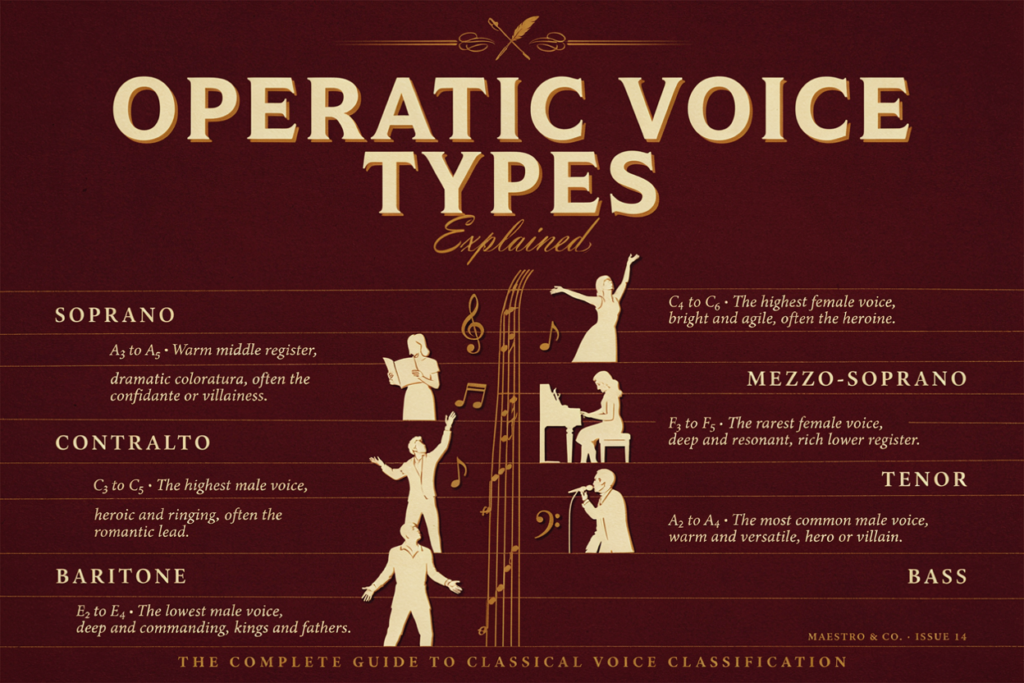
Operatic voice types are classifications used to organize singers
according to vocal range, tone color, vocal weight, tessitura, and
dramatic ability. The six main opera voice types are soprano,
mezzo-soprano, contralto, tenor, baritone, and bass.
Unlike simply measuring the highest and lowest notes a singer can
produce, opera classification focuses on how a voice functions
naturally. A singer’s vocal color, comfortable singing area, and ability
to perform specific dramatic roles are all considered when identifying
an operatic voice type.
Understanding these categories helps singers choose suitable repertoire
and helps composers and directors match voices with opera characters.
You can explore a broader explanation of opera voice
classification
to see how these systems developed.
How Are Opera Singers Classified?
Vocal Range
Range describes the distance between the lowest and highest notes a
singer can produce. While range is important, it is only one part of
voice classification.
Two singers may have similar ranges but belong to different categories
because their voices have different colors, strengths, and comfortable
areas.
Vocal Color and Timbre
Timbre, the unique quality or color of a voice, plays a major role in
opera. A soprano may have a bright, clear sound, while a contralto often
has a darker and deeper tone.
Tessitura
Tessitura is the part of a singer’s range where the voice feels most
comfortable and sounds strongest. Opera roles are usually written around
a singer’s tessitura rather than their absolute highest note.
Vocal Weight and Dramatic Ability
Some voices are light and agile, while others are powerful and dramatic.
These qualities create additional classifications such as lyric,
dramatic, and coloratura voices.
What Are the Main Female Operatic Voice Types?
Soprano
The soprano is the highest standard female opera voice type. Sopranos
often perform leading roles that require brightness, flexibility, and
expressive high notes.
Common soprano categories include:
- Coloratura soprano: light, agile voices capable of fast and complex
passages - Lyric soprano: warm and smooth voices suited for expressive melodies
- Dramatic soprano: powerful voices designed for intense roles
Soprano roles often represent young heroines, romantic characters, and
central figures in opera. Learn more about this category through the
guide to soprano voice.
Mezzo-Soprano
The mezzo-soprano is the middle female opera voice type, positioned
between soprano and contralto. Mezzo-sopranos usually have warm, rich
voices with strong middle and lower registers.
Common mezzo-soprano characteristics include:
- Powerful middle range
- Warm vocal color
- Emotional depth
- Flexibility across different roles
Many mezzo-sopranos perform supporting characters, dramatic figures, or
roles originally written for younger male characters.
You can explore this classification further in the article about
mezzo-soprano
voice.
Contralto
The contralto is the lowest female classical voice type. True contraltos
are rare and are recognized for their naturally deep, dark, and powerful
vocal quality.
Contraltos often have:
- Strong lower notes
- Heavy vocal weight
- Dark resonance
- Unique dramatic presence
Because genuine contralto voices are uncommon, many lower female singers
are sometimes incorrectly classified as contraltos when they may
actually be altos or mezzo-sopranos.
What Are the Main Male Operatic Voice Types?
Tenor
The tenor is the highest standard male opera voice type. Tenors are
known for bright upper registers, emotional intensity, and heroic roles.
Common tenor categories include:
- Lyric tenor: smooth and expressive sound
- Dramatic tenor: stronger and more powerful tone
- Spinto tenor: combines lyric warmth with dramatic power
Tenors often perform romantic leads and heroic characters. More
information about this classification can be found in the guide to
tenor voice.
Baritone
The baritone is the middle male opera voice type. It sits between tenor
and bass and is one of the most common male vocal categories.
Baritones typically have:
- Rich middle-range voices
- Strong dramatic expression
- Balanced high and low abilities
Baritone roles often represent leaders, fathers, rivals, or complex
characters.
Bass
The bass is the lowest male opera voice type. Bass singers provide depth
and authority in opera and often perform roles involving wisdom, power,
or seriousness.
Bass categories include:
- Lyric bass
- Dramatic bass
- Basso profundo, the deepest bass category
You can learn more about this category in the guide to bass
voice.
Operatic Voice Types Chart
Voice Type Gender Position Common Characteristics
Soprano Female Highest Bright, flexible, high range
Mezzo-Soprano Female Middle Warm, rich, expressive
Contralto Female Lowest Deep, dark, rare
Tenor Male Highest Bright, powerful upper register
Baritone Male Middle Rich, balanced, dramatic
Bass Male Lowest Deep, authoritative sound
What Is the Fach System in Opera?
The Fach system is a German classification method used to organize
singers into specific categories based on vocal characteristics and
suitable opera roles.
A Fach classification considers:
- Vocal range
- Vocal color
- Vocal weight
- Age and dramatic suitability
- Role requirements
This system helps opera companies assign singers to roles where their
voices are most effective. A singer’s Fach may change slightly
throughout their career as the voice matures.
How Do Singers Find Their Opera Voice Type?
Finding an operatic voice type requires more than testing vocal range.
Professional teachers usually evaluate:
- Comfortable singing range
- Vocal tone
- Register transitions
- Tessitura
- Vocal strength and flexibility
A voice test can provide useful information, but a complete
classification usually requires listening to the singer over time.
Understanding the difference between range and classification is also
important. A singer’s notes alone do not always reveal their true voice
type, which is why voice type vs vocal
range is an
important concept for singers.
Frequently Asked Questions
What are the six main opera voice types?
The six main opera voice types are soprano, mezzo-soprano, contralto,
tenor, baritone, and bass. They are classified by range, vocal color,
tessitura, and dramatic qualities.
What is the highest female opera voice?
Soprano is the highest standard female opera voice type. Some sopranos,
especially coloratura sopranos, can sing extremely high notes with
agility.
What is the lowest male opera voice?
Bass is the lowest standard male opera voice type. Some bass singers
have exceptionally deep voices known as basso profundo.
Can a singer change their opera voice type?
A singer’s natural voice type usually remains stable, but training and
vocal maturity can change range, strength, and vocal characteristics
over time.
What is the rarest opera voice type?
True contralto voices are considered among the rarest female opera voice
types because they require a naturally deep range and distinctive dark
vocal quality.

Benjamin Parker is a voice classification and singing analysis writer at VoiceTypeTest. He focuses on vocal type identification, vocal range analysis, pitch recognition, and singing education tools for vocalists, musicians, choir singers, and beginners.